
Water Damage Restoration, Rot & Hidden Repairs
It rains here 150 days a year, and older homes show it behind the walls. Stop the water, call us, and we will walk you through the repair, the restoration, and the insurance claim.
Why water damage is part of remodeling in the Northwest
The Puget Sound region gets roughly forty inches of rain a year, which is less than Houston or Atlanta. What it gets instead is duration: about 155 days a year with measurable rain, most of them between October and May, with weeks at a time when the exterior of a house never fully dries. Add wind off the water, deep shade under mature trees, moss that holds moisture against roofs and siding, and a housing stock in which most homes are twenty-five to a hundred years old, and hidden water damage becomes less an exception than a condition of the work.
We do not say this to alarm anyone. We say it because a homeowner who understands it makes better decisions: about where to spend, about what to expect when walls come down, and about which contractor to trust with the discovery. Most of the water damage we find is manageable, and nearly all of it is better found during a remodel than after one.
Water damage restoration as a project of its own
Much of our water-damage work is not discovered during a remodel. It is the reason the homeowner called. A leak behind a shower that has finally come through the ceiling below. Siding that has been soft at the bottom edge for two winters. A deck ledger that pulled away from the house. A crawlspace that smells wrong every spring. Rot at a window sill that a painter pointed out and would not touch. These are standalone restoration projects for us, and they are a large part of what we do.
If water is actively running, call a plumber first. Stopping the source is a plumber's job and it should not wait for anyone else. Once the water is off, call or text us at 253-400-4550 and we will walk you through everything that comes next: what to photograph, what to leave alone, whether a claim makes sense, and what the repair will involve.
From there, the project runs the way our remodels run. We find the full extent of the damage before we price it, open only what needs to be opened, replace what is compromised rather than cover it, rebuild the flashing, drainage, and waterproofing so it does not happen again, and finish the repair so no one can tell where it was. You get a fixed proposal, a schedule, written updates, and one point of contact.
Often your chance to stop just living with it and start loving it
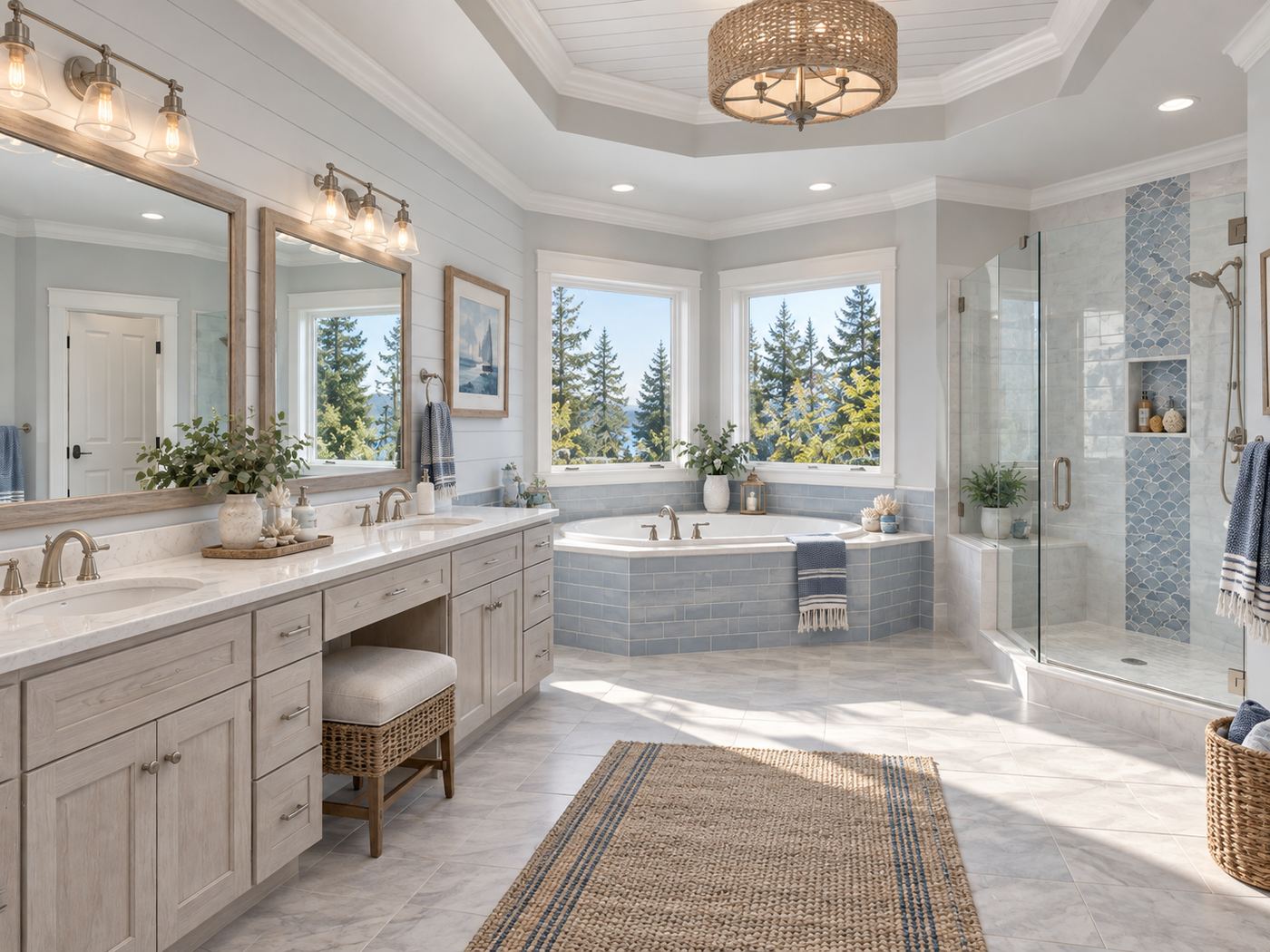
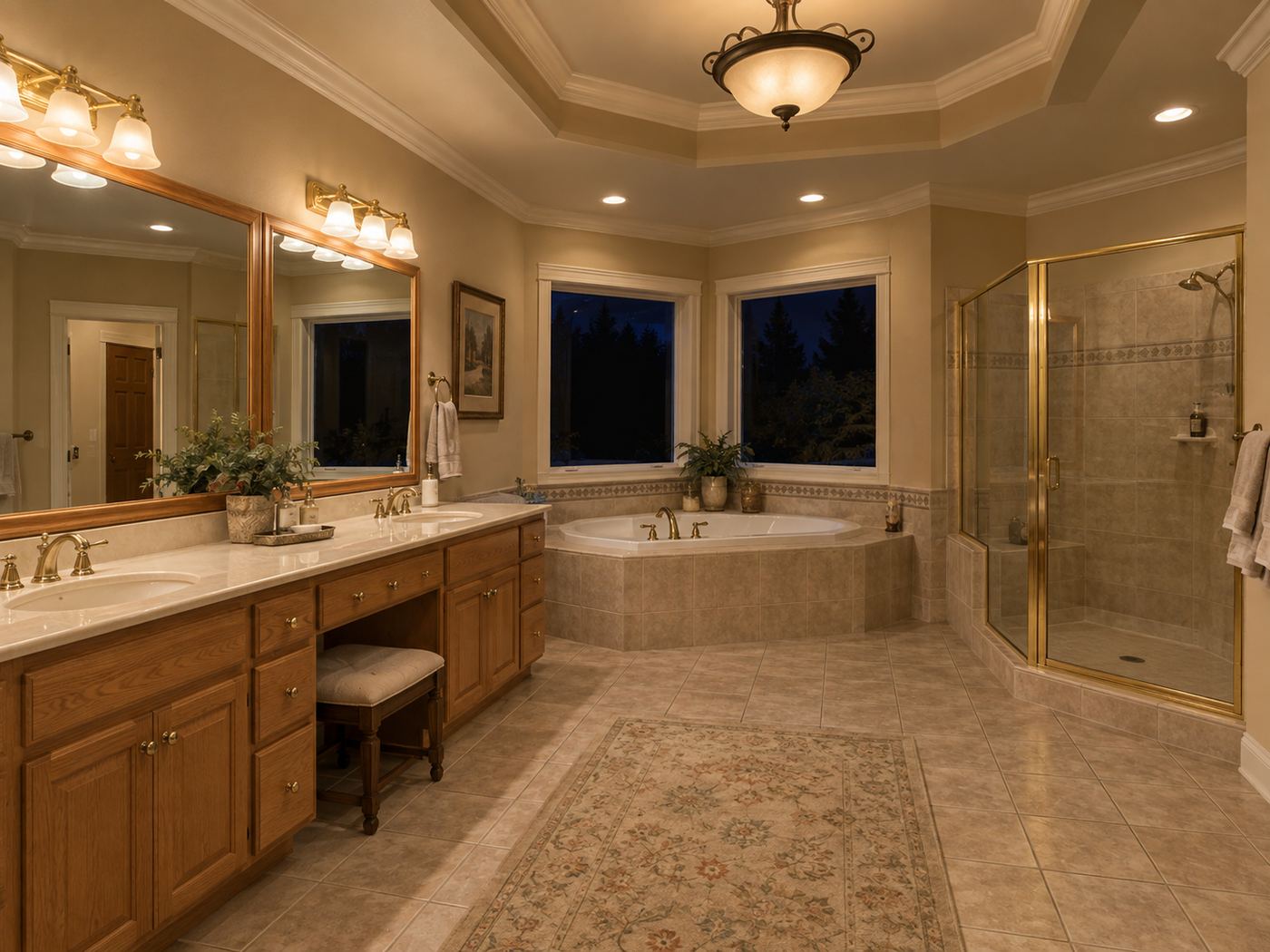
Nobody wants water damage. The ceiling stain, the soft floor, the smell, the adjuster, the fans running for a week: it is a bad stretch, and we will not pretend otherwise. But inside it is a chance most people never get on purpose. The laundry room you dread, the bathroom you apologize for, the kitchen that makes every holiday harder than it should be: one of them is already coming apart. The question is what it gets put back together as.
Think about what you have been tolerating. Doing laundry in a cramped, dim room with nowhere to fold. A shower you can barely turn around in. A kitchen where two people cannot cook at once and nobody wants to be the one who hosts. People live with these rooms for years because the moment never seems right. Water damage makes the moment for you, and it comes with an advantage you will not get again: the remodel you have been thinking about will never be cheaper than it is right now.
Here is why. A remodel started from scratch spends a large share of its budget just getting to bare framing: demolition, debris, drying, structural repair, rough plumbing and electrical, subfloor, drywall, permits. A water-damage restoration has to do every one of those things anyway, and when a claim applies, the policy is paying for them. What is left is the part you actually wanted: the layout, the cabinetry, the tile, the fixtures, the light. You buy the upgrade, not the teardown. And because the walls are open, the plumbing, wiring, and framing are visible and fixable, so the new room is built on a known foundation rather than a hopeful one.
So when we scope a water-damage project in a kitchen, bath, laundry room, or anywhere else that matters to how you live, we show two paths side by side: the repair that puts the room back the way it was, and the repair that gives you the room you have wanted. The second is priced as the difference above the first, with the insurance-covered scope and your own scope kept separate and documented. Plenty of the rooms people are proudest of began with a phone call about a leak.
What we find, by the age of the house
Balloon framing lets water travel unseen from the roofline to the sill plate. There is no house wrap and often no flashing beyond what a carpenter improvised. Cedar siding sits on tar paper or nothing. We see rot at sill plates and rim joists, damp basements and crawlspaces, deteriorated mortar in unlined chimneys, and plaster that has been repainted over a stain more than once.
Bare-earth crawlspaces without vapor barriers, post-and-beam floors over damp ground, galvanized steel supply pipes corroding from the inside after fifty years, cast-iron drains, low-slope roofs with drainage that was optimistic in 1958, and single-pane aluminum windows that sweat every winter onto the sill below.
Cedar shake roofs past their lifespan, T1-11 plywood siding rotting at the bottom edge, decks and hot tubs attached to the house without proper ledger flashing, leaking skylights, sliding-door thresholds, and the first generation of tight construction without the ventilation to match it.
This is the era that keeps us busiest. Louisiana-Pacific's Inner-Seal OSB siding and other hardboard sidings swelled and rotted so widely that a 1996 class-action settlement eventually paid nearly a billion dollars to homeowners. Barrier-type EIFS synthetic stucco trapped water behind it. Window flashing was often omitted or reversed. Polybutylene supply plumbing, installed from about 1978 to 1997, failed at the fittings. The same face-sealed wall details that caused the leaky-condo crisis in neighboring British Columbia were built into single-family homes across the South Sound.
Builder-grade vinyl windows reaching end of life, missing kick-out flashing where a roof meets a wall, stucco and stone veneer installed without a drainage plane or weep screed, and houses tight enough to hold moisture inside without adequate exhaust.
What we find, by where the house sits
Waterfront and bluff homes in Gig Harbor, Fox Island, University Place, Normandy Park, and Steilacoom take the full force of wind-driven rain on their west- and south-facing walls, and salt air corrodes the fasteners and flashing meant to keep water out. Bluff seepage and slope drainage add pressure from below. Lakefront homes in Lakewood sit on high water tables with humid microclimates. Plateau homes in Edgewood and on South Hill sit over glacial till that perches water beneath crawlspaces. Valley-floor homes in Puyallup and Sumner contend with a high water table and, in places, mapped floodplains. Every one of these settings has a pattern, and we have learned to look for it.
Where the damage hides
When we open walls, the same places appear again and again: the corners and sills below windows, the rim joist and sill plate where a deck attaches, the subfloor around tubs, showers, and toilets, the framing behind tile in a shower that lost its waterproofing years ago, the wall cavity below a failed tub overflow, the cabinet floor under a dishwasher or a refrigerator's ice-maker line, the wall behind a hose bib, and the intersection where a roof meets a wall without a kick-out flashing. Mold in a wall cavity, discovered when the drywall comes off, is common enough that our process assumes it might be there.
How we handle it
Pre-construction includes a careful examination of the exterior envelope, the crawlspace or basement, the roof-to-wall intersections, and the plumbing, with moisture readings where we suspect a problem. What we can see goes into the fixed proposal. What we cannot see is addressed through a clearly defined allowance, so that a discovery is handled by a documented change order with a price you approve before work proceeds, never by a surprise invoice.
Rotted framing is replaced, not sistered over and hidden. Failed flashing is rebuilt in the correct sequence: sill pan, jambs, head, with the water-resistive barrier lapped so that water runs out, not in. Siding is installed over a drainage plane, as Washington's residential code requires. Crawlspaces get vapor barriers, drainage, and ventilation to code. Baths are rebuilt with a bonded sheet-membrane waterproofing system rather than a pan and a prayer. Kitchens and baths get exhaust ventilation sized to the state energy code.
Wet materials are dried or removed within the window that prevents mold growth, and moisture is verified with a meter before anything is closed up. When mold exceeds what a contractor should handle, we bring in a remediation professional. When rot has reached structure or a bluff or foundation is involved, we bring in an engineer.
Two tests come before demolition in older homes, and neither is optional. Homes built before 1980 are presumed to contain asbestos in materials that look harmless: popcorn and textured ceilings, vinyl flooring and the mastic under it, drywall joint compound, duct wrap, pipe insulation, and some siding and roofing. JIT does not do asbestos work ourselves; as the general contractor we manage it through our experienced, certified partners. Before we open anything, suspect materials are sampled by an AHERA-accredited inspector, and if asbestos is found it is removed by a licensed abatement contractor before our crews touch the room, with the clearance documented. Homes built before 1978 are also worked under the EPA's lead-safe Renovation, Repair and Painting rule. A contractor who skips either step is putting your family, and his crew, at risk.
You will see photographs of what we found, an explanation of what it means, and a priced recommendation. You decide. Most homeowners are relieved: the problem they half-suspected for years is finally in the open, and it is being fixed by the same team that is building their new kitchen.
Insurance, and how we help you through it
Most homeowners have never filed a water-damage claim, and the process is harder than it should be. We work alongside you through it: we document the damage and its cause with photographs and moisture readings, write a scope and estimate in the form adjusters expect, meet the adjuster on site when it helps, and explain what the policy language means for the repair. We are not insurance advisors and your agent is the authority on your coverage, but we have been through enough claims to keep yours moving.
What to expect from coverage: homeowners insurance in Washington generally covers sudden and accidental water damage, a burst pipe for example, when it is reported promptly. It generally does not cover gradual leaks, seepage, or the rot and mold that result from them. We will tell you early which side of that line your damage is likely to fall on, so you can decide whether to file.
Planning for it
For homes more than twenty-five years old, we recommend carrying a contingency allowance in the project budget for conditions that cannot be seen until walls are open. The percentage depends on the age of the house, its setting, and what pre-construction reveals, and we will recommend a specific figure in your proposal. In our experience, homeowners who plan for the possibility are the ones who finish their projects on time and without regret.
Frequently asked questions
I have a leak right now. Who do I call first?
A plumber, to stop the water. That should not wait. Once the source is off, call or text us at 253-400-4550 and we will walk you through the rest: documenting the damage, deciding whether to file a claim, and planning the repair and restoration.
Will you stop the project if you find water damage?
No. We document it, price the repair through a change order, and, once you approve, fold it into the schedule. The affected area is addressed before finishes go on, so it is repaired once and correctly.
Do you handle water damage repair as a standalone job?
Yes. Standalone water-damage restoration is a large part of our work: leaks, rot, failed flashing and siding, bath and shower failures, deck and ledger damage, and crawlspace moisture. We find the full extent of the damage, repair it, rebuild the details so it does not recur, and help you through the insurance claim if there is one.
How do you know the problem is fixed?
Moisture readings before closing walls, correct flashing and drainage details verified at inspection, and a written warranty backed by a third-party program.
Will you work with my insurance company?
Yes. We document the damage and its cause, prepare a scope and estimate in the format adjusters expect, meet the adjuster on site when it helps, and explain what the policy language means for the repair. Your agent remains the authority on your coverage; we keep the claim and the repair moving together.
Is it really cheaper to remodel the room while you repair the water damage?
Yes, and it will never be cheaper than this. Kitchen, bath, laundry room, mudroom: a from-scratch remodel spends a large share of its budget on demolition, drying, structural repair, rough plumbing and electrical, subfloor, drywall, and permits. The restoration has to do all of that anyway, and when a claim applies, the policy pays for it. We price the remodel as the difference above the repair and keep the two scopes separate and documented.
Will you test for asbestos and lead before you start?
Yes. For homes built before 1980, suspect materials are sampled for asbestos by an AHERA-accredited inspector before any demolition; if asbestos is found, a licensed abatement contractor removes it and documents clearance before we proceed. JIT coordinates and schedules that work through our certified partners rather than performing it ourselves. For homes built before 1978 we follow the EPA's lead-safe Renovation, Repair and Painting rule. Both are built into pre-construction and the proposal.
Have a house that has been hiding something?
Tell us what you have noticed, or what you suspect. We typically reply within a few hours, often sooner, and you can call or text 253-400-4550 any time.